
Maintaining proper tire pressure is essential for a smooth and safe cycling experience.
If you’ve ever been stranded with a flat tire, you know how frustrating it can be. A reliable bike pump makes all the difference—especially when you’re out on the trail or getting ready for your daily ride.
But not all pumps work the same way. Some need muscle. Others need electricity. So how do you know which one fits your routine better?

Electric and manual bike pumps each have their strengths.
Some cyclists love the speed and precision of electric models. Others prefer the simplicity and control of manual ones.
The choice comes down to your riding habits, storage space, and how much time you want to spend pumping air.
In this guide, you’ll find a clear breakdown of both types. You’ll also get detailed reviews of top models, with their features, pros, and cons.
Whether you’re a commuter, weekend trail rider, or daily cyclist, this article helps you find a pump that works for your bike and your schedule.
Let’s break it down so you can ride prepared every time.
Electric Bike Pumps

Electric bike pumps are compact machines that inflate your tires automatically.
You connect the nozzle, set your PSI, and let the pump do the rest. Most models include digital screens for pressure readings and built-in batteries that recharge via USB.
They’re great for quick top-ups or complete refills and often include features like flashlights or mobile charging ports.
Many cyclists keep them at home or in their cars due to their weight and need for power. They’re useful for commuters and serious riders who value convenience and accuracy over portability.
Features:
- Automatic Pressure Control
- You set your target PSI
- The pump stops automatically when it reaches that number
- Digital Gauges
- Easy-to-read screens with real-time PSI readings
- Some even show battery levels and alerts
- Multiple Power Options
- Many work on rechargeable lithium-ion batteries
- Others plug into car cigarette lighters (12V DC), USB ports, or wall outlets
- Multi-Valve Compatibility
- Some electric pumps support both Presta and Schrader valves without needing adapters
- LED Lights and USB Charging
- Useful in low light or emergencies
- Some models let you charge your phone
Pros:
- No physical effort needed
- Quick inflation speeds
- Digital accuracy
- Great for high-pressure tires
- Can inflate multiple tire types
Cons:
- Higher cost
- Requires power or charging
- Heavier than manual pumps
- Louder during use
- Some models are bulkier and harder to carry
Manual Bike Pumps
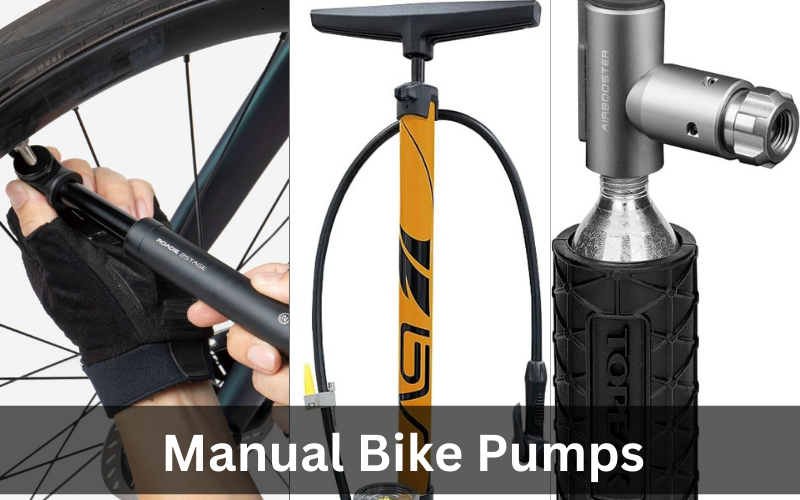
Manual bike pumps are reliable tools that require no power source. You operate them by hand or foot to inflate your tires.
Most feature analog gauges, and some offer dual-stroke pumping for faster inflation. Floor pumps stay at home due to their size, while mini versions are lightweight and portable.
They’re preferred by cyclists who ride far from power sources or want a backup option.
Although slower and more tiring than electric models, manual pumps last for years and don’t rely on electronics. They’re an essential tool for anyone who bikes regularly.
There are multiple types:
- Floor pumps (ideal for home use)
- Mini hand pumps (for riding)
- Frame-mounted pumps (attached to your bike)
Features:
- Physical Pumping Action
- Air is pushed by your hand or foot
- Some models offer dual-action, pumping air on both up and down strokes
- Analog Gauges
- Found on many floor pumps
- Less precise but still helpful for general pressure monitoring
- Lightweight and Compact Options
- Mini pumps fit in your bag or attach to the frame
- Some weigh less than 100 grams
- No External Power Needed
- Works anytime, anywhere
- Great for long-distance rides or remote areas
Pros:
- Affordable
- Long-lasting and durable
- Always ready to use
- Lightweight and portable options
- Quiet operation
Cons:
- Slower to inflate tires
- Requires physical effort
- Less accurate pressure readings
- Can be hard to use for high-pressure road bike tires
Comparison Table: Electric vs. Manual Bike Pumps
| Feature | Electric Pump | Manual Pump |
|---|---|---|
| Ease of Use | Very easy; push-button inflation | Manual effort required |
| Speed | Inflates tires quickly | Slower process |
| Pressure Accuracy | Digital readings; highly accurate | Analog gauges; less precise |
| Portability | Bulkier; not ideal for carrying on rides | Lightweight mini versions available |
| Power Requirement | Needs charging or outlet | No power needed |
| Price Range | $40–$150+ | $10–$60 |
| Durability | Electronics can fail or degrade | Very durable; fewer parts to break |
| Extra Features | LED lights, USB charging, auto shut-off | Basic functionality only |
| Noise Level | Loud during operation | Silent |
| Best Use Case | Home, garage, or car use | On-the-go repairs, long rides |
Things You Might Not Know
- Electric Pumps and PSI Lock Memory: Some advanced electric pumps can remember your last used PSI setting so you don’t need to reset it each time
- Dual Head Pump Nozzles: Certain manual and electric pumps use a dual-head system that works on both Schrader and Presta valves without flipping parts
- Heat Build-Up: Electric pumps that run for a long time can overheat, especially budget models without heat sinks or auto cool-down features
- Mini Pumps and Efficiency: Mini manual pumps might take 200–300 strokes to inflate a tire to 100 PSI. Dual-action models cut that number nearly in half
- Built-in Storage: Some floor pumps have compartments to store valve adapters or patches—great for keeping everything together
- CO2 Cartridges vs. Pumps: Many riders carry CO2 cartridges as a quick inflation method, but they’re single-use. Manual pumps offer unlimited use with more time and effort
How to Choose Based on Riding Style
- City Commuter: Keep an electric pump at home for quick top-offs. Bring a small manual pump for emergencies
- Long-Distance Cyclist: Use a frame-mounted manual pump or mini pump. Power outlets aren’t always available on remote trails
- Road Racer: Electric pumps help achieve precise, high-pressure inflation quickly. Also have a backup manual option during rides
- Casual Weekend Rider: A basic floor pump will usually suffice. Manual pumps offer better long-term value if used occasionally
Conclusion
Electric and manual pumps serve different purposes but both are essential for prepared riders
Electric pumps give you speed, accuracy, and convenience. They’re great if you have a reliable power source and want to save time
Manual pumps offer simplicity and dependability. They’re essential for long rides and unexpected flats
Having both types gives you flexibility—use the electric one at home and carry a manual one on the road
Choose based on how you ride, where you go, and how much effort you’re willing to put in
Making the right choice means fewer delays, safer rides, and better control of your bike’s performance